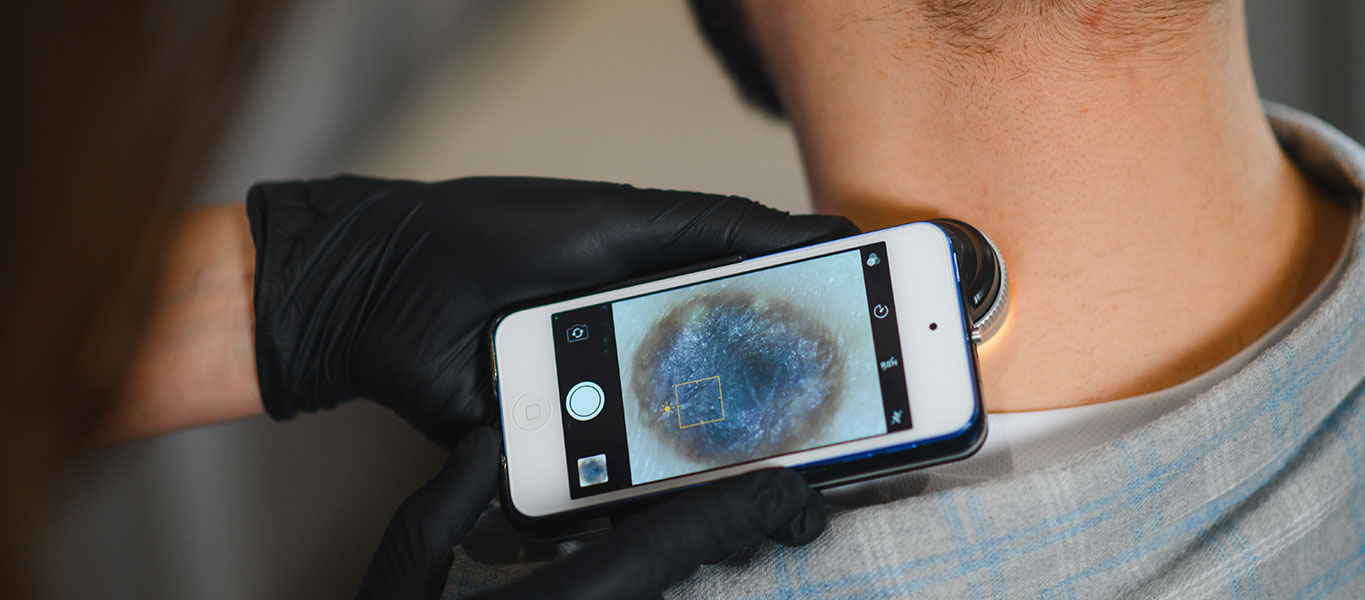
Melanoma is a type of skin cancer that begins in cells called melanocytes. These cells are responsible for producing melanin, the pigment that gives skin its color.
While melanoma accounts for only a small percentage of all skin cancers, it is considered the most serious because it is more likely to grow quickly and spread to other parts of the body if not detected early.
Melanoma often looks like a mole and can develop anywhere on the skin, but it is most commonly found on areas exposed to the sun, such as the chest, back, legs, neck, and face. In some cases, it can also develop in less common areas like the eyes, under the nails, or inside the mouth.
There are several types of melanoma.
-
The most common is superficial spreading melanoma, which tends to grow along the surface of the skin before spreading deeper.
-
Nodular melanoma is a more aggressive form that grows quickly into the deeper layers of the skin.
-
Lentigo maligna melanoma typically occurs in older adults and develops in sun-damaged skin, especially on the face.
-
Acral lentiginous melanoma is a less common type that appears on the palms of the hands, soles of the feet, or under the nails.
Early detection is important because melanoma is highly treatable when caught early. Changes in the size, shape, or color of a mole, or the appearance of a new or unusual spot on the skin, should be evaluated by a healthcare professional.
Learn more about diagnosing melanoma skin cancer.