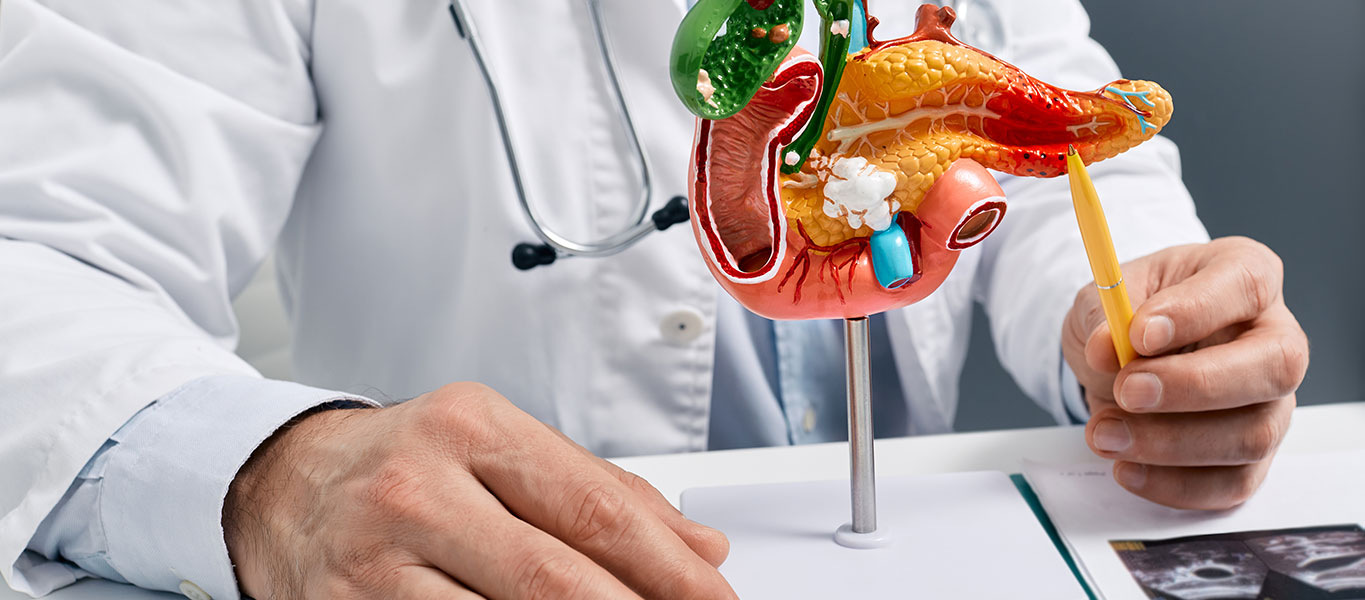
Your pancreas is an organ located behind the stomach that plays an important role in both digestion and blood sugar control. It helps with digestion by producing enzymes that break down fats, proteins, and carbohydrates in the food you eat. Secondly, the pancreas helps regulate blood sugar levels by producing hormones such as insulin and glucagon.
Together, these functions make the pancreas essential for turning food into energy and keeping your body’s systems balanced.
Types of Pancreatic Cancer
There are two main types of pancreatic cancer.
Pancreatic adenocarcinoma is the most common type of pancreatic cancer. It begins in the exocrine cells of the pancreas, which make up most of the organ. These cells are responsible for producing digestive enzymes that help break down food.
The pancreas contains exocrine glands and ducts that carry these enzymes through small tubes into the pancreatic duct. This duct connects with the common bile duct and releases digestive fluids into the small intestine to aid in digestion. When the cells lining these ducts begin to grow out of control, pancreatic adenocarcinoma can develop.
A smaller portion of the pancreas is made up of endocrine cells, which produce hormones such as insulin and glucagon to help regulate blood sugar. Cancers that start in these cells are called pancreatic neuroendocrine tumors, and they behave differently from pancreatic adenocarcinoma.
Learn about how pancreatic cancer is diagnosed.